Experimenting with acids and bases can make for exciting chemistry projects!
Acidic solutions have a higher concentration of hydrogen ions (H+).
These are hydrogen atoms that have lost an electron and now have just a proton, giving them a positive electrical charge.
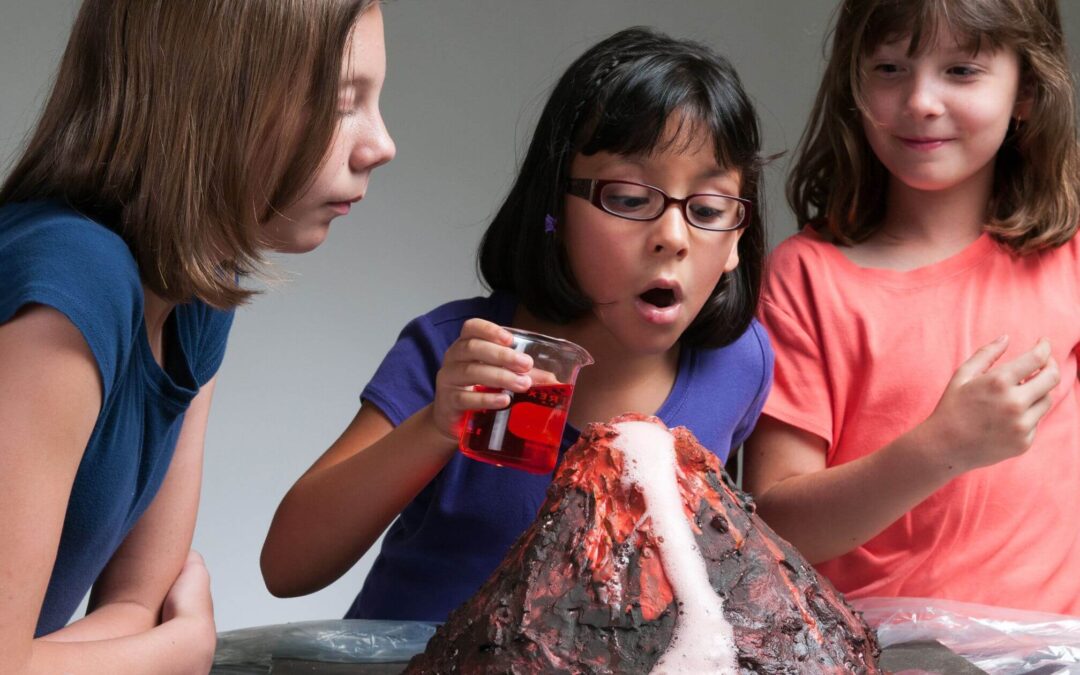
Basic solutions, on the other hand, contain hydroxide ions (OH-). One of the simplest activities to show how acids and bases react with each other (and to demonstrate their different properties) is to make a vinegar and baking soda volcano.
For another reaction experiment, put an Alka-Seltzer tablet in the bottom of a clear plastic film canister (the kind where the cap fits inside instead of closing over the outside).
Fill the canister with warm water and then quickly put the cap on and watch the acid-base reaction!
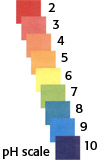
The pH scale is used to measure how acidic or basic a solution is. Acids have a pH below 7; bases have a pH above.
Neutral solutions (like distilled water) with a balanced number of H+ and OH- ions have a pH of 7. Do the following projects to explore the cool effects of pH.
Litmus is a natural acid-base indicator extracted from a type of lichen. If you have red and blue litmus paper, you can test different solutions for whether they are acids or bases.
Blue litmus paper turns red when a solution is acidic; red litmus paper turns blue in basic solutions.
Try testing window cleaner, toilet bowl cleaner, orange juice, and apple juice—pour a little of each into separate test tubes or small glasses or jars.
Use the litmus paper to determine which are acids and which are bases. Here are the pH levels of some other substances that you might test:
- Lemon juice (2)
- Vinegar (3)
- Milk (6)
- Egg whites (8)
- Baking soda (9)
- Ammonia (10)
Human blood has an ideal pH of 7.4; even slight fluctuations can seriously affect our bodies.
You can also make your own pH indicator—use a blender to mix one part chopped red cabbage with two parts boiling water and use the juice to test different solutions.
Acids will turn the pigments in the indicator to a reddish color; bases will turn the pigments bluish or yellow-green.
Mystery Pitcher
Make ordinary water turn bright pink and then back to clear! This makes a great “magic trick” to impress your friends – just be careful no one mistakes it for fruit punch and drinks any!
>> Check out our project video to see this trick in action!
What You Need:
- Phenolphthalein solution
- Sodium carbonate
- Vinegar
- 5 glasses and a non-see-through pitcher of water
What You Do:
1. In the first glass put a little less than 1/8 teaspoon of sodium carbonate, in the second put 6 drops of phenolphthalein solution, and in the third put three droppers-full of vinegar.
2. Add a few drops of water to the first glass and stir to dissolve the sodium carbonate.
3. Fill all the glasses with water from the pitcher, then pour all of them back in the pitcher except for the glass with vinegar.
4. Refill the remaining four glasses – the water will be red!
5. Now pour all five glasses back in the pitcher. Refill the glasses one last time—the liquid will be colorless again!
What Happened:
Phenolphthalein is a pH indicator, but it only turns colors in reaction to bases. When you poured the four glasses back into the pitcher, the phenolphthalein reacted to the sodium carbonate, a base, and turned the solution to bright pink “kool-aid.” To change it back to “water,” all you had to do was add the acidic vinegar, which turned the phenolphthalein colorless again.
| Featured Kit Chemistry Magic Tricks Kit 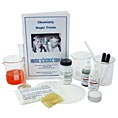 With this cool experiment kit, you’ll be able to make color-changing solutions and even turn water into a solid instantly! The 12 chemistry tricks in this kit will amaze your friends plus teach about the science of pH, acids and bases, density, chromatography, and polymers. This set includes high quality chemistry equipment, like glass beakers and a graduated cylinder, as well as three chemicals to make two kinds of invisible inks, turn ordinary water bright red, make a colorful rainbow in a tube, and much more. With this cool experiment kit, you’ll be able to make color-changing solutions and even turn water into a solid instantly! The 12 chemistry tricks in this kit will amaze your friends plus teach about the science of pH, acids and bases, density, chromatography, and polymers. This set includes high quality chemistry equipment, like glass beakers and a graduated cylinder, as well as three chemicals to make two kinds of invisible inks, turn ordinary water bright red, make a colorful rainbow in a tube, and much more. |
Rainbow Reaction Tube
Amaze your friends by mixing two solutions to make a rainbow!
Watch as purple sinks to the bottom and red floats to the top, and they mix together to form every color in between.
What You Need:
- 10ml graduated cylinder
- Universal indicator
- Sodium carbonate
- Beaker
- Distilled white vinegar
What You Do:
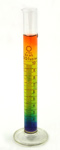 1. Put 15 drops of universal indicator in the graduated cylinder and add filtered water up to the 10 ml mark. The solution should be yellow-green.
2. Add 3 drops of vinegar to the solution in the graduated cylinder, and it should turn red.
3. In a beaker, put two scoops of sodium carbonate and then add about 30 ml of water. Mix together with the stirring rod until the sodium carbonate dissolves. The solution should be clear.
4. To start the reaction, fill one dropper full with sodium carbonate solution. Squeeze the dropper into the graduated cylinder quickly, rather than drop by drop. The clear solution should instantly turn dark purple, and slowly sink to the bottom, swirling around to make the rainbow.
5. Let the contents of the cylinder settle, until you can see each color from bluish-purple to red. To make the rainbow disappear, pour it into an empty beaker, and it should turn yellow or yellowish green.
What Happened:
Universal indicator changes colors to show the pH level of a substance. In this case, when you mixed an acidic solution (vinegar) with a basic one (sodium carbonate), the indicator made a colorful spectrum — from dark blue to red. Interestingly, if you had added the solutions in the opposite order, you would not have seen a rainbow. To get the rainbow effect, another scientific principle is at work—density. The sodium carbonate solution you made is denser than the indicator solution, so it sinks to the bottom. As the sodium carbonate solution makes its way to the bottom, some of its molecules mix with vinegar molecules, making a new solution, which shows up as a color of the pH scale.
If you don’t turn the graduated cylinder upside down, the rainbow will last several days. Over time the colors will mix together through the process of diffusion. The molecules of each solution will mix throughout the graduated cylinder, rather than staying concentrated at the top or bottom. Once you mix the acid and base solutions together, the solution will be pH neutral, and look yellow or slightly green.
To make a different kind of rainbow tube, try making this rainbow density column with all household materials.