Science Lesson
What Are Leaves For?
Leaves are very important for trees – they provide food for the whole tree (or plant)!
How do they do it? Leaves use a very special process called photosynthesis (say: foto-SIN-thuh-sis) to convert energy from sunlight into sugars and starches that a tree uses as food.
Leaves have an important chemical inside of them called chlorophyll (say: KLOR-uh-fil), which is what makes them green, and is also what allows them to conduct photosynthesis.
(See related article: How Flowers Grow.)
Leaves also help keep you cool on hot days by making shade. The leaves fill in the spaces between the branches to make a canopy, sort of like an umbrella, over the tree.
Leaves also help make trees good homes for animals, like birds, squirrels, and bugs by providing them shelter, a place to hide, and even food!

Why Do Leaves Change Colors?
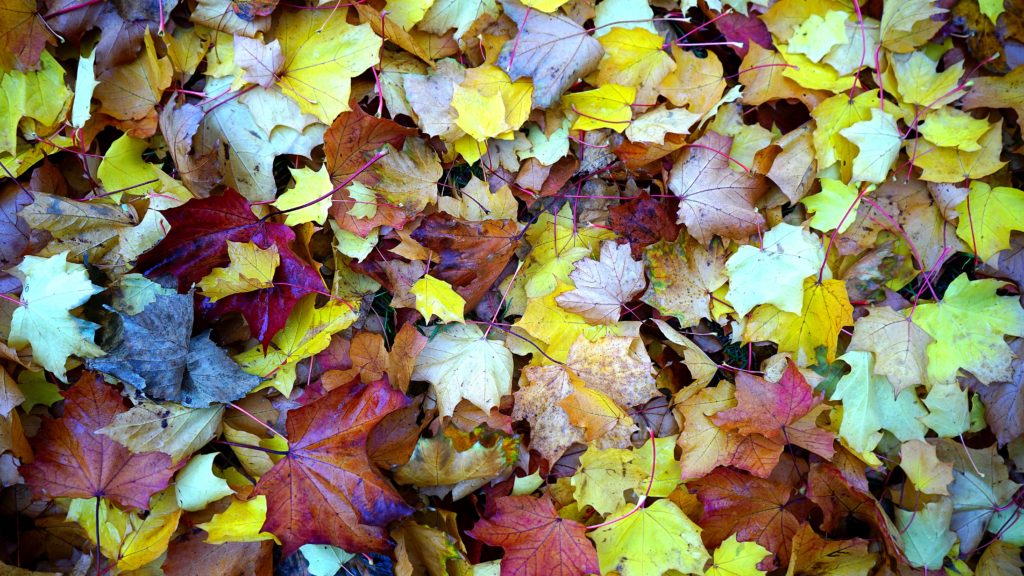
Different chemicals found in leaves are what cause them to change colors in the fall.
As we already learned, chlorophyll is the chemical that gives leaves their green color while they make food through photosynthesis during the spring and summer months.
When it starts to get cooler outside and the sun does not shine for as long each day, trees know it is time to start storing up food for winter.
To do that, the chlorophyll in the leaves starts to break down and the food that the leaves have been making is stored inside the tree instead of in the leaves.
Now that the chlorophyll is gone, instead of being green, the leaves become all the pretty colors of fall, like orange, yellow, red, or even purple!
(See how to preserve leaves in this article.)
These colors have actually been in the leaves all summer long, we just couldn’t see them because the green from the chlorophyll was blocking them.
(See pictures from our Leaf Chromatography Experiment for a better understanding.)
Chlorophyll and the other chemicals that cause the colors in leaves are called pigments. Pigments are also used to dye thread and fiber that clothes are made out of.
The other leaf pigments besides green come from chemicals called carotenoids (say: kuh-ROT-in-oidz) and anthocyanins (say: an-thuh-SYE-an-inz).
Carotenoids make leaves yellow, orange, and brown and are always in leaves, just like chlorophyll. Not all leaves have anthocyanins, which cause colors like red and purple to appear.
Anthocyanin is formed when sugar gets trapped in a leaf after the chlorophyll is gone. Then, when the leaf is exposed to sunlight, the anthocyanin turns leaves red and purple! The leaves in the picture have a little of each of the pigments in them.
Why Do Leaves Fall Off Trees?
As the weather gets cooler and the days get shorter in the fall, trees start to prepare for winter.
Trees use sunlight to make a special layer or seal between each leaf and the branch it is connected to. Then the leaves fall easily to the ground, leaving the branches of the tree protected from the cold that will come in the winter and also helping the tree store up food!
Since leaves have water inside their cells, they can’t survive freezing temperatures, because the water would freeze and the leaves would die.
When leaves fall to the ground, they eventually break down and provide nutrients for the soil, helping prepare for more plants to grow in the spring and also create a layer that helps the ground absorb water.
Another reason that trees lose their leaves is because many of them get torn or damaged during the spring and summer by weather (such as hail stones), insects that eat leaves, or diseases that trees can get.
Since they lose their leaves in the fall, they will be able to grow brand new ones in the spring!
Deciduous Trees vs. Evergreen Trees
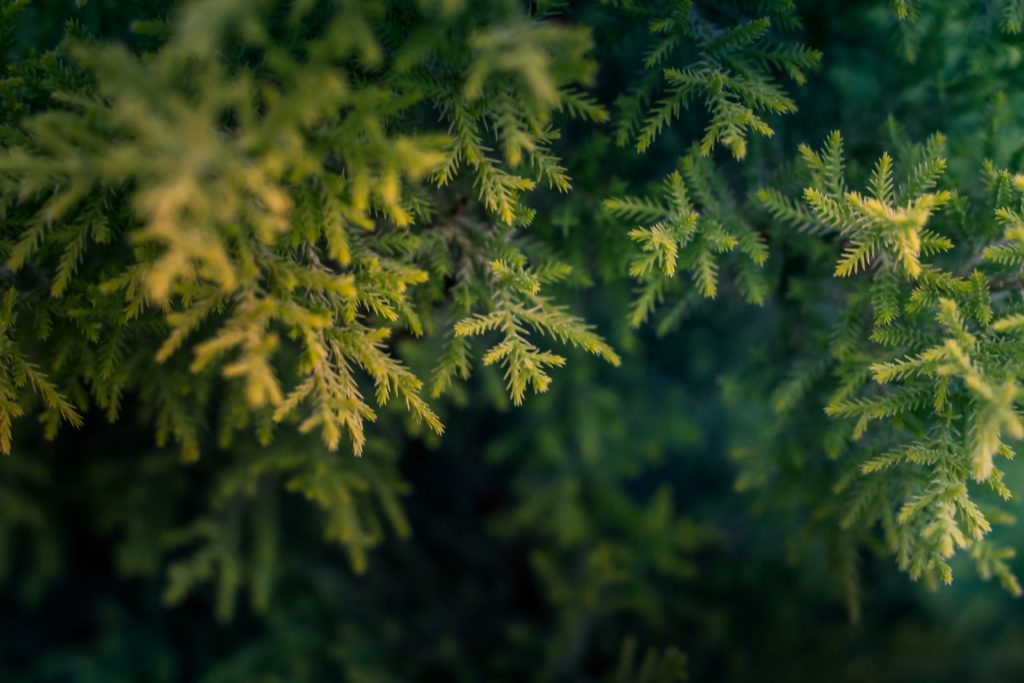
You may have noticed that some trees don’t lose their leaves in the fall at all and that their “leaves” look rather odd compared to the leaves you see on most trees.
Trees that lose their leaves in the fall or winter are called deciduous (say: de-SID-joo-us).
Trees that do not lose their leaves are called evergreen and their leaves are usually called needles.
Just like their name says, they stay green all year long, because their needles can survive freezing cold temperatures and do not fall off in the fall!
The cells inside the needles are different than the cells inside leaves from deciduous trees—they do not have water inside them that will freeze and they also have a smooth waxy coating on the outside that helps them stay warm during the winter.
Science Words
Photosynthesis– a process that happens in the leaves of plants where sunlight, water, and carbon dioxide (from the air) are converted into food and oxygen.
Chlorophyll– a chemical that is in leaves throughout the year and that helps them make food through photosynthesis. It is also what makes leaves green.
Carotenoid– a chemical in leaves that makes them yellow and orange. Just like chlorophyll, it is in leaves throughout the year, but it is not as strong as chlorophyll.
Anthocyanin – a chemical that comes from sugar that gets trapped in a leaf after the chlorophyll is gone. Anthocyanin is only in some leaves, and only in the parts that have a lot of water. It makes leaves red and purple when the leaves are exposed to sunlight.
Printable Worksheet
Use this worksheet with the Take A Nature Walk science activity to help your kids practice keeping a science journal. They can create a page for as many trees as they want and keep them in a three-ring binder to create a fall tree file book.

This time of year, leaves begin to change from green to other beautiful colors and fall to the ground where we can crunch them under our feet as we walk or rake them into piles to jump in! But why are leaves important for trees and why do they fall off?
Want to learn more about the science of autumn? Check out our unit study, designed for K-2 students: Explore Science: Seasons, exclusively from Home Science Tools.
Science Projects
Project 1: Take A Nature Walk
Go for a walk outside on a nice day to collect leaves and get a closer look at the changes that are taking place around you with the change of the seasons.
Your nature walk will be more fun if you bring someone along to help you collect and observe. Make sure one of the people you take along is a parent or other adult!
Here are some things you might want to take with you:
- Plastic bags for bringing leaves and other items home
- A snack and water bottle if you are going for a long walk
- A notebook and pencil to help you remember things you see but can’t take home
- Camera to take pictures along the way
- Backpack or bag to keep it all in
Things to collect:
- Leaves in every fall color you can find (look for yellow, orange, red, brown, purple, and even green ones)
When you get home, press the leaves between sheets of newspaper and some heavy books for a few days until they dry out. That way they will stay flat and keep their beautiful colors instead of curling up and looking dead.
- Some leaves or “needles” from trees that don’t lose their leaves in the fall
Compare them to the leaves you gathered that came from trees that do lose their leaves. How are they different? How are they similar?
- Leaves from plants that are not trees
Compare these leaves with the needles and leaves you gathered from trees. Did you find any leaves from plants that were changing color? Some plants that are not trees have leaves that will change colors and fall off, but most of the time, the whole plant that is above the ground will die and grow back from its roots in the spring. Some plants don’t grow back in the spring at all – they only live for one growing season.
Things to notice:
- Are most of the leaves on a tree the same color, or do you see more than one color of leaves on the same tree?
- Do you see more trees that stay green and don’t lose their leaves during the fall or trees that do lose their leaves?
- How does the grass look in the places you walked? Is it still green? Is some of it turning brown?
- Do you notice any flowers blooming?
- Do you notice other things falling from trees – such as acorns or seed pods?
- If you see any animals, such as squirrels, what are they doing?
Most animals, plants, and trees are preparing for the winter during the fall months. Squirrels are gathering and storing food and finding homes that will provide them with shelter from the cold. Plants lose their flowers and leaves, or else start to die, even though their roots might live through the winter. Except in very warm places, trees are losing their leaves to prepare for winter.
Some trees also drop their seeds in the fall. The seeds get buried in the ground (sometimes they just get covered up by falling leaves) where they will be protected until springtime when they can start to grow into new trees. Grass also starts to turn brown as it gets colder.
Project 2: What Color Are Leaves?
What You Need:
- A few green leaves from 3 different kinds of trees
- 3 small drinking glasses
- Rubbing alcohol
- Plastic wrap
- A pan of hot tap water
- Coffee filters or filter paper
- Scissors
- Tape
- 3 pencils
What You Do:
1. Tear the leaves into small pieces. Put the pieces from each tree into different glasses (make sure each glass only has pieces from one type of tree!).
2. Get an adult to pour rubbing alcohol into each glass so that all the leaf pieces are covered.
3. Put a piece of plastic wrap over the top of each glass to keep the alcohol from evaporating (getting soaked up by the air).
4. Let an adult set the glasses in the pan of hot water and leave them for about 30 minutes. Check to make sure the alcohol in each glass has turned green before you take them out. If it hasn’t, refill the pan with hot water and put the glasses back in until the alcohol turns green.
5. While you wait, cut 3 strips out of the middle of the coffee filters. Make each strip about 1 inch wide. Tape one end of each strip to the middle of a pencil. Cut the other end of the strip into a point.
6. Once the alcohol in each glass has turned green, take the glasses out of the hot water.
7. Set a pencil with the paper strip taped to it over each glass so that the paper strip hangs down and the point touches the alcohol in the glass. If the paper is too long, roll some of it around the pencil to shorten it.
8. Let the glasses and papers sit for about 30 more minutes and then check to see if anything is happening. You should see the green color start to soak up on the paper. Wait even longer to see if any other colors come out!
What Happened:
The alcohol and the heat from the hot water made the color in the leaves dissolve so you could see it in the alcohol. It is similar to what happens when you make tea. When you put a tea bag (filled with tea leaves) in a cup of hot water for a few minutes, the water becomes colored and flavored by the tea leaves.
When you put the paper strips into the green-colored alcohol, the colors started to get soaked up by the paper and you should have seen a couple different shades of green.
If you waited long enough, you might have been able to see other colors from the leaves appear on the paper – such as orange or yellow. If you saw colors besides green, those the are colors that the leaves will change to in the fall!
Did you see any difference in the colors from the different kinds of leaves you tested?
The reason you couldn’t see all those colors in the green leaves or in the alcohol solution is because the chemical that causes the green color is much stronger than the chemical that causes orange and yellow.
hen you put the paper into the alcohol solution, the colors had a chance to separate, and the orange and yellow are were no longer covered up by the green.
The same thing happens when leaves start to change colors – the chemical that makes them green starts to go out of the leaves, leaving the chemicals that make other colors behind, turning the leaves all the pretty colors of fall!
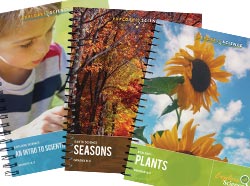
Are you looking for more lessons, worksheets, and science experiments about the four seasons?
Check out our unit study, designed for K-2 students.