– For tips on performing your experiment and presenting your project, see our free science fair guide.
– Browse our Science Fair Supplies category for more project ideas.
Kitchen Chemistry:
- Your kitchen offers lots of chemistry ideas. Does adding salt to water help it boil faster? Can you dissolve an egg shell? How can you dissolve an egg yolk? How does using oil in the pan affect how something cooks? What food items are most biodegradable? Do other fruits or vegetables work like red cabbage to create a pH indicator? How do cola products compare in acidity with other common drinks or food?
- Carbon dioxide (obtained from a baking soda, vinegar, and water mixture) can put out a candle flame; how does it work? What happens when you use different kinds of vinegar, like apple cider or balsamic, with the baking soda?
- Design a science fair project comparing and contrasting how long it takes ice and other frozen solids to melt at room temperature compared to a warm stovetop or the refrigerator.
- What difference does salt make to the melting point? What other substances work the same way? Which is more efficient for melting ice – salt, or a commercial de-icing chemical?
- Test several different types of cereal or juice to do a comparative study on which product contains the most sugar, vitamin C, etc. Do you expect that cereal made for children has more sugar in it than cereal made for adults? Use Benedict’s solution to identify the presence of sugar.
- Using Benedict’s solution, test “diet” foods/drinks for glucose and compare with their regular counterparts. Does the presence of artificial sweetener decrease the amount of glucose?
- Do juices that claim to have more vitamin C really have more vitamin C than their counterparts? Does cooking affect the amount of vitamin C or other nutrients found in food? Use indophenol to test for the presence of vitamin C.
- Test several of your favorite foods to determine which food is the healthiest for you and which is the worst for you. Use Sudan III or a paper bag test to identify lipids (fats) in the food. Use Biuret reagent to identify the presence of protein. Use Lugol’s iodine solution to identify the presence of starch. (You can do this project and the previous three with our Chemistry of Food kit.
- Does water conduct electricity? Can you add something to it to help it do so?
- How does temperature affect the density of different liquids?
Metals:
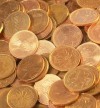
- Pennies can be used to make a battery or plate an iron nail, without damaging them. Experiment to see if pennies minted before 1982 (when they were 95% copper) provide more power or a thicker coating than newer pennies do (with only 2.5% copper). Do other metals work as well for batteries or plating a nail?
- Which pH level is most conducive to corrosion in iron or copper? Try suspending iron or copper electrodes in solutions with different pH levels (try water and vinegar, for starters). Use pH papers for the tests.
Mixtures and Compounds:
- How can you separate mixtures into the compounds that make them up? Experiment with different ways to distill potable (drinkable) water from salt water.
- Do a chromatography test to determine what colors make up similar lipstick (or other cosmetics) colors in different brands. You can also test what dyes are found in juice mixes or colored markers. How do forensic scientists use chromatography?
- Most people in the U.S. and Canada wash their clothes with synthetic laundry detergents rather than real “soap.” What are some differences in the properties of each, and which do you think gets clothes cleaner? Come up with a similar experiment comparing face wash to face soap.
- What is the difference between hard water and soft water? How do things like bath salts help counteract the effects of hard water?
- Explore methods of extinguishing fires. What can you use to put out a candle flame besides water? (Be careful!)
- Different elements give off different types of light when they burn. See if you can determine what elements are present in different types of lighting using spectroscope analysis.
- Experiment with polymers that can expand in water, turn a liquid into a solid, and more. Design a project about surface tension, polarity, osmosis, saturation, viscosity, molecular bonding, etc.
- Grow and experiment with crystals: Does temperature have an effect on the growth rate of crystals? What about leaving them covered or uncovered? Does dry air or moist air seem to grow more crystals?
More information:
Find all kinds of chemistry lab supplies here for your project.
Visit our science fair project ideas page for ideas in other categories.