
Electrolysis is the process by which an electric current is passed through a substance to affect a chemical change. The chemical change occurs when the substance loses electrons (oxidation) or gains them (reduction). In the two experiments listed below, the first reactive substance is water and the second one is a copper sulfate solution.
Electrolysis is used to remove hair, split compounds, and in the manufacturing process to decorate, strengthen, and make metal surfaces more resistant to rust.
>>Watch this video to see the electroplating of a copper key>>
An Electrolysis of Water Experiment and an Electroplating Experiment
Electrolysis: Splitting Water
For this experiment, you can gather your own supplies or buy a complete water electrolysis kit.
Adult supervision required.
What You Need:
- 6-volt or 9-volt battery
- Two alligator clip leads or insulated wire
- Beaker or glass
- Piece of thin cardboard or card stock
- Two #2 pencils
What You Do:
1. Fill the beaker or glass with warm water.
2. Carefully remove the erasers and metal sleeves so you can sharpen both ends of each pencil. These pencils are your electrodes. The graphite in them will conduct electricity, but won’t dissolve into the water.
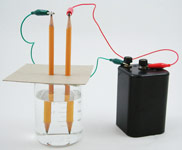
3. Cut a piece of the cardboard to fit over the beaker, then punch two holes in the center of the cardboard about an inch apart. Push the pencils through the holes and set them in the glass. They should extend into the water, but not touch the bottom of the glass. The cardboard will hold them in place.
4. Connect each pencil to the battery with an alligator clip lead attached to the exposed graphite (pencil lead). If you don’t have alligator clip leads, use two lengths of wire and strip an inch of insulation off each end. Wrap the wire around the graphite of each pencil and connect the wires to the battery. You may need to use tape to hold the wires in place.
What Happened:
As soon as you connect the wires to the battery, you will see bubbles appearing around each of the pencil tips in the water and floating upward. Those bubbles are the components of water—hydrogen and oxygen gas—that have been split apart by the electricity as it travels through the water from one pencil to the other. The pencil attached to the negative terminal of the battery collects hydrogen gas while the one connected to the positive terminal collects oxygen. Does one pencil collect more bubbles than the other? Which one? Why do you think this is?
(Hint: Water’s chemical name is H2O because it has two hydrogen atoms to every one oxygen atom.)
Further experimenting:
- Try adding an electrolyte to the water in the beaker. Water doesn’t conduct electricity that well by itself, but any electrolysis of water experiment could be accelerated by adding table salt to the water. When this is done, you should see a change in how quickly the bubbles form.
Safety Note: using salt may produce small amounts of chlorine gas, similar to the amount present when using bleach.
- Try different types of batteries. Can you make electrolysis happen with a 1.5-volt battery? What about if you add an electrolyte?
- With some real electrolysis equipment you can collect the two gases in test tubes to measure the different amounts produced and test their different reactions to a flame.
- For electrolysis to work as true renewable energy, you need to use a clean energy source to run the reaction. Do this electrolysis experiment again using solar cells instead of a battery.
Electroplating: Copper-Plated Key
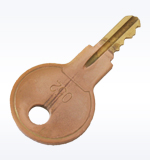 Electroplating uses a form of electrolysis in which the electrodes (conductors, usually metal) are immersed in an electrolyte solution and kept apart from each other. Then, using a direct current as a power source, one of the electrodes is coated with the metal of the other one. Jewelers and utensil manufacturers use electroplating. Professional electroplating requires specialized chemicals and equipment to make a high-quality coat, but in this electrolysis experiment you can try your hand at a simple procedure that will transfer copper to a brass key.
Adult supervision and chemical safety equipment required.
>> Watch our project video to see this project in action!
What You Need:
- 1.5-volt D battery with battery holder
- Two alligator clip leads or insulated wire
- Beaker or glass
- Copper sulfate
- Copper electrode (or coil of copper wire)
- Brass key
- Safety equipment
What You Do:
1. Prepare the key for copper-plating by cleaning it with toothpaste or soap and water. Dry it off on a paper towel.
2. Stir copper sulfate into some hot water in a beaker until no more will dissolve. Your solution should be dark blue. Let it cool.
3. Use one alligator clip to attach the copper electrode to the positive terminal of the battery (this is now the anode) and the other to attach the key to the negative terminal (now called the cathode).
4. Partially suspend the key in the solution by wrapping the wire lead loosely around a pencil and placing the pencil across the mouth of the beaker. The alligator clip should not touch the solution.
5. Place the copper strip into the solution, making sure it doesn’t touch the key and the solution level is below the alligator clip. An electrical circuit has now formed and current is flowing.
6. Leave the circuit running for 20-30 minutes, or until you are happy with the amount of copper on the key.
What Happened:
The copper sulfate solution is an electrolyte that conducts electricity from one electrode to the other. When the current is flowing, oxidation (loss of electrons) happens at the copper anode, adding copper ions to the solution. Those ions travel on the electric current to the cathode, where reduction (gain of electrons) happens, plating the copper ions onto the key. There were already copper ions present in the copper sulfate solution before you started, but the oxidation reaction at the anode kept replacing them in the solution as they were plated onto the key, keeping the reaction going.
This project has many variables, including the cleanness and smoothness of the key, the strength of the copper sulfate solution, and the strength of the current. If a black soot-like substance starts forming on the key, your solution is not strong enough for the current. Take the electrodes out and add more copper sulfate. When you put them back in, make sure the anode and cathode are as far apart as possible.
There are lots of projects you can do with electroplating! One fun idea is to use a flat piece of brass as your cathode and draw a design on it with an oil-based marker. The copper will not bond where the marker is. After you’re done plating it, you can use acetone (or nail-polish remover) to wipe off the marker, leaving a design of the brass showing through the copper. You can use a little metal polish to make the copper shiny, if you want.
You may want to try this simple copper-plating experiment that doesn’t use electrolysis and requires only household materials.