By conducting one germ experiment, you may find answers to basic questions about these microorganisms:
What are germs?
Can you see germs?
Where do they come from?
How can you protect yourself from them?
There are lots of questions to ask about germs. Here are some ideas of fun things to do that will give you a peek into the world of germs!
Definitions
Bacteria – small, single-cell organisms that live almost everywhere. Some are harmful, but most are harmless and even helpful.
Viruses – a small disease-causing agent that lives inside the cells of larger organisms, such as plants, animals, and humans.
Immune System – your body’s defense system to help you fight off diseases and harmful germs.

Germ Experiment #1
How Do Germs Spread?
Do you get told to wash your hands after playing outside or using the bathroom, even when there isn’t any dirt on them? Try this experiment to see why you should wash your hands, even if they look clean!
What You Need:
- Hand lotion
- Glitter
- Sink or large bucket
- Paper towels
- Soap
- Water
- A helper
What You Do:
1. Put a drop of lotion on your hands and rub them together to spread the lotion out evenly.
2. With your hands over a sink or large bucket, have your helper put a pinch of glitter in the palm of one of your hands.
3. With your hands still over the sink, make a fist with the hand that has glitter on it, then spread your fingers out. What do you see?
4. Now press the palms of your hands together and pull them apart. What do you notice about your hands?
5. Touch your helper’s hand. Now do you see anything on it?
6. Get a paper towel and use it to wipe your hands clean of all the glitter. Is it working?
7. After using the paper towel, try using soap and water to wash your hands. Did the glitter come off?
What Happened:
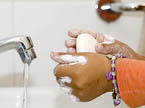 After getting the glitter on your hands, you should have noticed it spreading very easily to anything you touched, even your helper’s hand.
When you tried to use a paper towel to remove the glitter, some of the glitter probably came off, but most of it stayed on your hands.
But when you used soap and water to wash your hands, the glitter came off pretty easily.
The glitter is acting the same way that the germs on your hands act – there are a lot of them, they spread around easily, and it can be tough to get them off.
The difference is that germs are so small you can’t see them without a microscope, so you have to know when you may have come into contact with germs and wash your hands often.
If you accidentally touched your mouth, nose, or eyes while doing this experiment, you may have found glitter getting left behind near these areas.
Germs travel the same way and can easily enter your body if you touch your face with dirty hands, which can make you sick.
That’s why it’s important to wash your hands before you eat. It is also important to wash your hands after touching something that might have germs, such as when you use the bathroom or play outside.
If you don’t, the germs can easily spread to more places and to other people and cause sickness.
Germ Experiment #2
Growing Germs
Germs can be found just about everywhere, but some places have more germs than others. Try this experiment to see where germs are hidden.
(Note: This experiment takes a week to complete.)
What You Need:
- An adult helper
- Gloves
- Potato
- Sharp knife
- 4 Ziplock bags
- Masking tape
- Marker
What You Do:
1. Have your adult helper wash his or her hands, put the gloves on, and then cut the potato in four equal pieces.
2. Take the first potato piece and put it in one of the bags. Seal the bag. Use the marker to write on the masking tape and label this bag as “control.”
3. Pick a surface – such as a countertop, sink, or a floor – and while wearing the gloves, rub the second potato piece on it. Place the potato slice in a bag and label it with the surface it was rubbed on.
4. Take the third potato piece outside and lay it in a flower bed, a puddle, or something similar. Place the potato slice in a bag and label it with the outside area it was placed in.
5. Finally, touch the fourth potato piece all over with your bare hands. Place the potato slice in a bag and label it “touched with hands.”
6. Take all four bags and place them in a dark area at room temperature, like a closet or cupboard. Leave them there for a week. After the week has passed, pull the bags out and look at the potato pieces. (Don’t take the potatoes out of the bags.) What do you see on the pieces? Which potato has the most growth on it? Which potato has the least? Why do you think this is?
7. When you are done looking at the potatoes, have an adult pour a little bleach into each bag, seal the bags, and then throw them away.
What Happened:
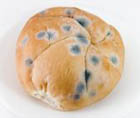 Do you see black, green, or white fuzzy stuff on your potato slices?
These are germs, called mold and bacteria, growing on the pieces. T
he number of germs has grown so large that now you can see them without a microscope (like the piece of bread in the picture).
The potato pieces that were handled by you, rubbed on a surface and placed outside probably had the most growth on them.
That’s because the potatoes picked up germs from those places. The potato piece that did not touch anything probably has the least amount of growth on it, because it didn’t touch anything that had germs.
But that potato piece is important because it lets you see how many germs already existed on the potato.
The other potato pieces probably had just as many germs on them from the start, but once they touched other things, the potato pieces picked up more germs and the germs began to grow more than the germs on the first potato.
Learn About Germs
Germs
 Germs are very small organisms, or living things, that can cause people to get sick. They can cause you to get a stomach ache or get an infection in a cut on your hand. They are so small that you can’t see them unless you use a high-powered microscope.
Doctors can use microscopes to determine what type of germs are causing someone to be sick.
This allows them to determine the best medicine to help the person get well. There are different kinds of germs, but two of the most common are bacteria (say BACK-TEER-EE-YA) and viruses (say VY-RUHS-IZ).
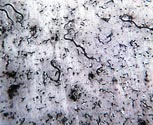
The picture to the right shows different types of bacteria at 400x magnification, click on the picture for a larger view.
Bacteria are little creatures made of one cell. They live everywhere and get their food from the environment they live in.
For instance, bad bacteria in your mouth like to eat the sugar that sticks to your teeth. They then produce toxins (say TOK-SINS) that cause bad breath, gum disease, and cavities.
The best way to prevent these germs is to brush and floss your teeth daily and eat a diet low in sugar so this bacteria has nothing to feed on.
This picture shows salmonella bacteria cells, which live in raw meat and other foods and can cause people to get very sick.
Viruses can only survive by living in the cells of a living thing like a person, plant, or animal. They can spread through the body and make its host (the plant, animal, or person it is living in) very sick. The flu, cold sores, and chickenpox are all caused by viruses.
Helpful Germs
While it is common to believe that all germs are bad, most germs do not harm you at all and some are even good for you.
In the stomach, there are helpful germs that help you digest your food and produce vitamins that keep you healthy.
There are germs on your skin that keep your skin healthy and help keep bad germs from getting in your body.
Some germs are actually grown to be used as medicine to fight other germs. Penicillin is a common medicine that actually comes from mold and kills many harmful types of bacteria.
Some scientists now believe that being exposed to some germs is good for you because it helps build up your immune system (say IM-YOON SIS-TEM), your body’s defense system to fight off and protect you from the bad germs.
If your immune system meets some of these bad germs in small quantities, it will recognize them as being bad and be faster at fighting them off if a larger number enter your body later.
Still, it is important to protect yourself from harmful germs so that you don’t get sick.
Ways to Prevent Germs
The best way to fight bad germs is to wash your hands often with soap and warm water.
But you need to be a good hand-washer to help protect yourself from bad germs.
When you wash your hands, first wet them with warm water. Then apply soap and form a lather by rubbing your hands together. Do this for about 15-20 seconds, or about the time it takes to sing the ABCs.
Make sure to scrub in between your fingers and underneath your nails, as bad germs like to hide in these places. Rinse your hands well with warm water, then dry them with a clean towel.
You should wash your hands after playing outdoors or touching animals, before you eat, after you use the bathroom, and after coughing or sneezing.
This printable hand-washing guide makes a great teaching tool and visual aid for discussing germs with children.
Another good way to fight bad germs is to take care of yourself. Eat lots of healthy foods like fruits, vegetables, and whole grains. These foods are very good for you and help strengthen your immune system, giving you a better chance to fight off diseases that could otherwise make you sick. Getting exercise and plenty of sleep also helps support your immune system.
Printable Worksheet
This worksheet about germs has six pictures – kids can circle the ones that show germs being prevented and cross out the ones that show germs being spread.