1-800-860-6272  |   Customer Service  |   My Account  | My Cart Cart (0 item, $0.00)
Order Multiple Items >>

Learn About Bubbles

What Are Bubbles?

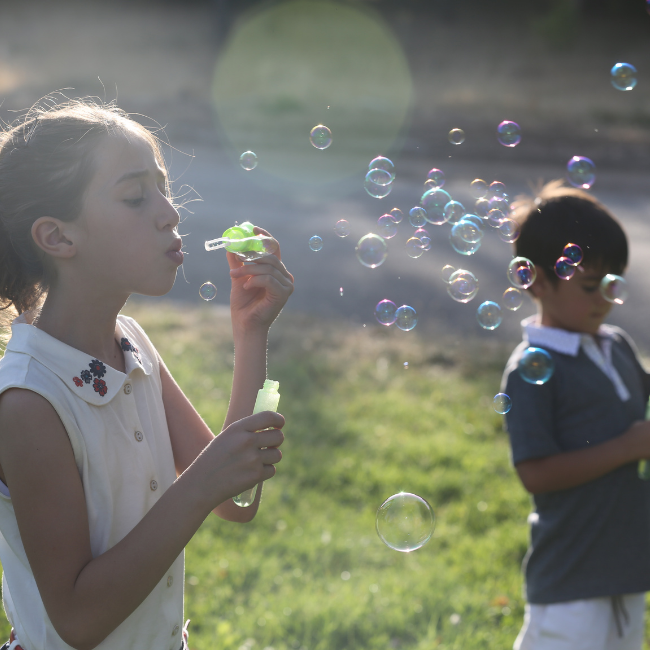
Bubbles are pockets of soap and water that are filled with air. When soap and water are mixed together and air is blown into the mixture, the soap forms a thin skin or wall and traps the air, creating a bubble. Soap bubbles are not the only kind of bubbles. You can find bubbles in lots of liquids. You might see small bubbles in plain water, but they will always be in the water, or floating on the surface of the water, not floating through the air. There are bubbles in soda pop, too. The special thing about soap bubbles is that they can float freely in the air; they don't have to be touching water or another liquid like most bubbles do. Can you find other bubbles around your house? What about something that is round and filled with air like a bubble? (Some examples are balls, balloons, and bubble wrap.)

How does soap help make bubbles out of water? Soap makes the surface tension of water weaker than normal. It also forms a very thin skin that is more flexible than water. When air gets trapped under the surface of the mixture of soap and water, the flexible skin stretches into a sphere shape (round like a ball), making a bubble! You can see the flexible skin that forms a bubble by dipping a bubble wand into some bubble solution. When you pull it out, the hole will be filled with a stretchable skin of liquid. If you blow gently on the skin, you'll blow a bubble!

What Happens to Bubbles?

Since bubbles are made from soap and water, they can only last as long as the water lasts. In dry air, water evaporates - it is soaked up by the dry air around the bubble and the skin of the bubble gets thinner and thinner until it finally pops! Evaporation isn't the only thing that pops bubbles. Anything dry can pop them. When a bubble floats through the air and lands on your finger, on a blade of dry grass, the wall of your house, or your pet's fur, the bubble will pop. When something sharp and dry touches the bubble, it pokes a hole in the bubble's skin, all the air goes out of it, and the bubble disappears! To learn how to touch a bubble without popping it, do Trick 2 in the Bubble Tricks experiment.

Why Are Bubbles Round?

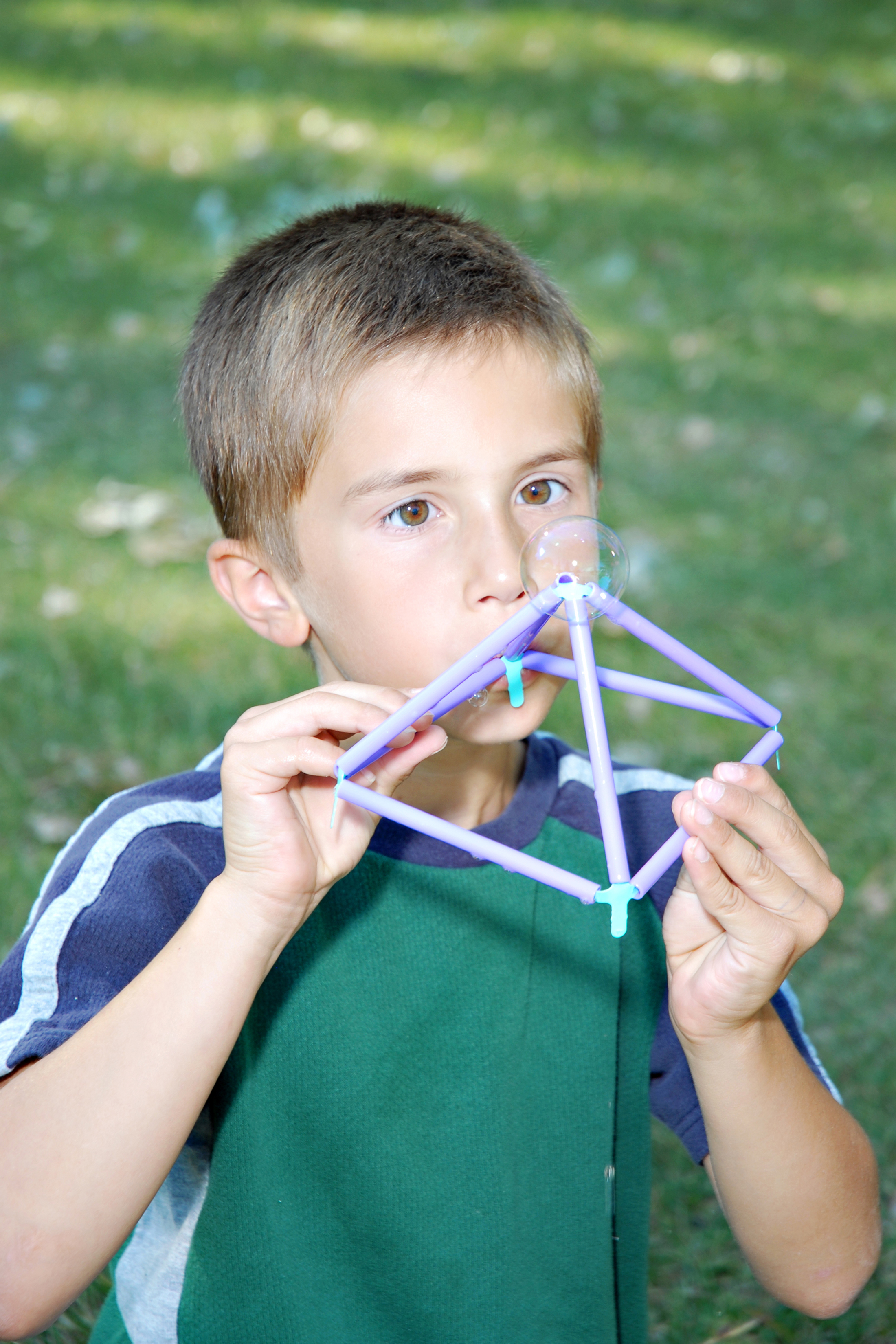
Bubbles that float in the air and are not attached to anything are always round because the thin wall of soap is pulling in while the air inside of it is pushing out. A bubble always tries to take up the smallest amount of space and hold the most air that it possibly can. A sphere, the round ball-shape of a bubble, is the best way to take up a little space and hold a lot of air. Even when a bubble starts out as a square or another shape, like in Trick 1 from the Bubble Tricks experiment, it will always turn into a round sphere as soon as it floats away into the air. A square bubble would take up more space than a round one.

There are a few times when bubbles are not round. Sometimes the wind blows them into different shapes. When bubbles are surrounded by lots of other bubbles, the ones in the middle get squished into other shapes, like squares or hexagons (shapes with six sides). Try blowing a lot of bubbles right next to each other in a shallow container and see if there are any that are not round. If you pop the bubbles on the outside, the ones on the inside will not be squished anymore and they will push back out to round bubbles again!

What Causes the Colors in Bubbles?

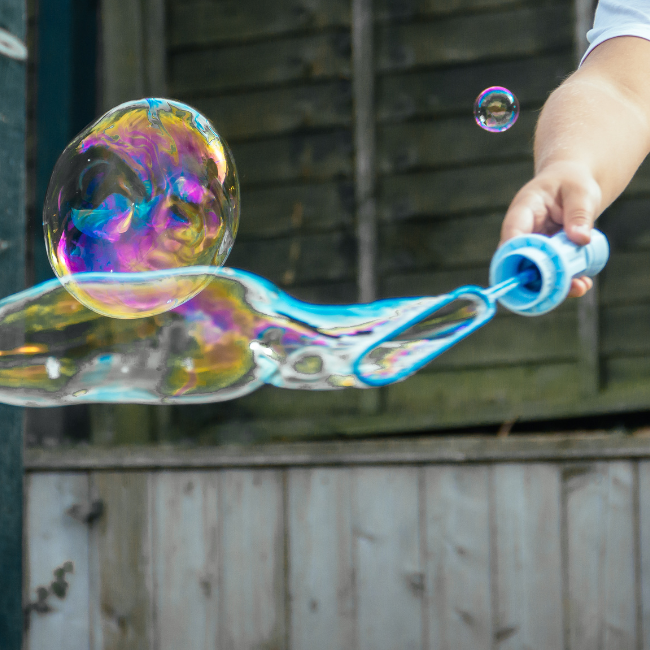
The pretty colors you see in bubbles are caused by light that is reflected off of the walls of the bubble. When light is reflected, here is what happens: light touches the outside of the bubble and bounces off of it, then it goes to your eye and you see color! As the surface of a bubble gets thinner, you will see different colors. When you first blow a bubble, you will probably see green and blue, then magenta or purple, and then just before the bubble pops, most of it will be a dark golden yellow color, or almost black. Sometimes the surface of the bubble is very thin on some parts, and thicker on other parts. When that happens, you will see lots of different colors on the bubble at once making it look like a rainbow! Next time you are outside blowing bubbles, see if you can tell when they are about to pop - remember, most of the bubble will probably be dark yellow or black just before it pops!

Printable Worksheet

For more bubble blowing fun, use this worksheet for ideas of common objects to try making bubbles with. Kids can also find other objects that work for making bubbles and draw them in the space provided.

HACKER SAFE certified sites prevent over 99.9% of hacker crime.

You Might Like

Mysteries of Rainbows Kit
$19.95