
Watch our microscopic life video to see microscopic creatures swimming around!
Microscopic Life Science Project
Experiment with Protozoa
They’re not aliens from another planet, in spite of the name! Protozoa are unicellular (one-celled). They’re also eukaryotic, meaning their cell nuclei are enclosed in membranes, unlike prokaryotic bacteria. They live in water (or watery tissues within the body, in the case of some diseases) and are classified in their own kingdom. You might have heard of some of these protists before: amoeba, euglena, paramecium, dinoflagellates, slime mold, and even most algae. You can either collect your own pond water to study, or use a culture kit.
What You Need:
- Pond water or a protozoa culture kit
- Microscope slides and coverslips
- Medicine dropper or pipet
- Compound microscope (with at least 400x)
- Methyl cellulose or a cotton ball (Optional)
What You Do:
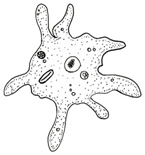 If you are using a protozoa culture kit, protists will usually begin to appear after 24 hours with the most variety after about 3 days. Different creatures will grow at different depths of your cup of water, so take samples from different parts of the cup.
1. Use a pipet to take a sample of the water and place 1-2 drops on a plain microscope slide. Cover the drops with a coverslip.
2. Examine the slide with your microscope starting at 40x. Most protists have little color and are difficult to see in bright light, so turn your microscope diaphragm to the lowest light setting. It will take patience to adjust the lighting and focus the microscope.
3. Initially you will see very tiny dots moving around on the slide. Some move very rapidly, others more slowly. You can slow them down for observation by adding a drop of methyl cellulose, or you can place a few fibers from a cotton ball on the slide. The fibers will act as obstacles to prevent the protists from moving out of the field of view too quickly.
4. Once you find an area of protist activity on the slide, turn the magnification up to 100x or even 400x to see them better.
5. If no animals are visible, try again each following day. Many conditions, such as water hardness, temperature, and water acidity, can affect the growth and development rate of these organisms. Each succeeding day you will typically find more and different varieties of protozoa in your culture. Initially, smaller species will be prevalent. As the days pass larger species will appear. You will also see different algae forms appear. Certain species will be more common from the top of the cup and others from near the bottom. Gradually, food and water conditions will change, affecting the growth and development rates of the different protozoa.
What to look for:
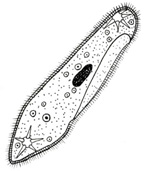 Type of movement: Protozoa use different methods of locomotion and are usually categorized based on how they move. An amoeba uses slow amoeboid movement, flowing along with pseudopods, or temporary foot-like extensions. One part of its cell wall flows out, looking like a foot, and then pulls the rest of the amoeba after it. (This is also the way the white blood cells in our bodies move.) Creatures like a euglena move with fast flagellate movement. They propel themselves with one or two whip-like flagella. Other protists, like paramecium, use ciliate movement. They are covered with tiny hair-like threads called cilia that beat back and forth rhythmically, propelling them through water. Flagella and cilia can be hard to see—try reducing the light entering the microscope and increasing the magnification.
Eating method: Eating habits amongst protozoans vary, too. Some protists, such as euglena or volvox (a type of algae), use chloroplasts to generate energy through photosynthesis, similar to plants. Euglena also serve as decomposers, by feeding off dead organisms. The amoeba, on the other hand, engulfs its prey with its pseudopodia and brings the food into its food vacuole (a sac where food is stored until digested). A paramecium sweeps its food down an oral groove lined with cilia into a gullet that closes off when full and becomes a food vacuole.
Microscopic Life Science Lesson
Microscopes in the Workplace
Imagine a guitar the size of a human cell or microscopic artwork hidden on a computer chip! These unlikely things are a reality thanks to microscopes. People use microscopes in a wide variety of fascinating jobs, and sometimes have a little fun on the side! Here are just a few of the fields that use microscopes.
Forensics – Investigators use microscopes to help examine evidence from a crime scene. The criminal may have left behind traces of soil from his shoes, a strand of hair, a thread from his clothing, or a drop of blood. With a microscope, investigators can use these tiny bits of evidence to link a crime to a suspect.
Archeology – Like forensics, archeology tries to discover what happened in the past with small bits of evidence. At an archeological dig, a few preserved fibers can indicate what kind of cloth people wore and how it was made. Preserved grain and pollen suggest what the land was used for and what types of plants grew there. From fragments of buildings, pottery, and tools, archaeologists can get some idea of how people from the past lived, and sometimes a close-up examination of bones will even indicate how they died.
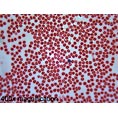
Medicine – Microscopes are used in hospitals to help diagnose illnesses. If you have a bad sore throat, for example, the doctor might swab your throat and send the sample to the lab. There medical technicians will test it and examine it with a microscope to see if you have a bacterial infection like strep throat. Microscopes are also used in some types of surgery that require precise work on small blood vessels and nerves.
Electronics – Computers keep getting smaller and smaller, thanks to amazing miniature electronic circuits called microchips. Microscopes are used in the production of computer chips. And if you look at a chip with a microscope, you might find that the engineers who designed it had some fun doodling on it! Check out some microscope pictures of computer chip artwork at the Silicon Zoo.
Nanotechnology – This field of science explores how to build things out of individual atoms and molecules! Using very specialized microscopes, scientists can actually rearrange atoms to create mini machines that are only nanometers long. (A nanometer is one billionth of a meter!) For practice, scientists working in nanotechnology have built a microscopic guitar that can be played using laser beams and machines that are dwarfed by nearly-microscopic bugs.
There are many different kinds of microscopes to meet the needs of all these different fields. The kind that you use in science class is called an optical microscope and it uses visible light to look at thing magnified. Many industries use something called an electron microscope, which sends a beam of electrons to the specimen instead of a beam of light. This type of microscope is very expensive and difficult to use, but it can magnify things up to a million times! The pictures it produces are black and white, but scientists will often add color later to help the details stand out.