An owl pellet dissection lab is a memorable (and fun!) way to learn about the eating habits of birds of prey— birds such as owls that eat rodents and small birds.
Watch our video below for a quick introduction.
What are owl pellets? They are the regurgitated remains of an owl’s meal, including all the bones of the animals it ate (usually small rodents). Owls usually swallow their food whole, digest the edible parts, and then expel the indigestible parts through their mouth as a pellet. It might sound gross, but dissecting these is a project most kids love!
(Safety Note: Most owl pellets you can buy are sterilized to kill bacteria, but take care not to dissect a pellet near food or put any part of it in your mouth. Use disposable gloves or wash your hands well after working with the pellet.)
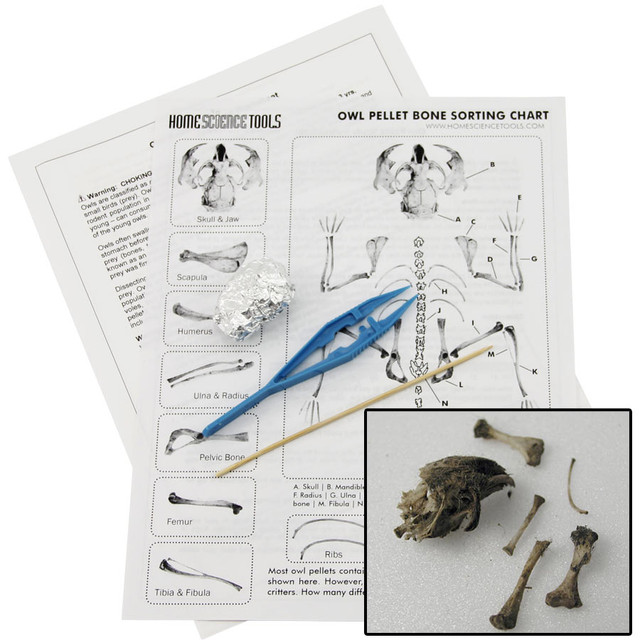
Buy the supplies for this project in one convenient kit!
1. To do this lab, you’ll need an owl pellet. Carefully inspect the outside of the pellet and note its size (when ordering samples, specify whether you prefer small, large, or jumbo owl pellets), whether there are any feathers visible, and whether there are any clues to where the pellet was found. Guess how many different animal skeletons the pellet contains.
2. Next, gently pull apart the pellet, being careful not to break any of the bones inside it. Use toothpicks or a teasing needle to separate the bones from the fur or feathers. Take special care when removing the skulls and jawbones, since they are the best way to identify the animals that the owl ate. Group similar bones together. When you’ve finished sorting the bones, roll the last bits of fur between your fingers to find little bones or teeth that might have been overlooked.
3. Once you’ve found all the bones, try to reconstruct the skeletons of the animals. Use an identification key to classify the bones. Owls usually eat more than one rodent before regurgitating the remains, so you should be able to find multiple bones that are similar. Can you distinguish between the bones of different kinds of rodents based on their size?
4. How many different kinds of animals did you find evidence of in the pellet? How many animals were there in total? What can you conclude about the eating habits of the owl that made your pellet?
A food chain shows the relationship between producers (plants) and consumers (animals that eat the plants or that eat other animals). Here are some simple relationships between the producers and consumers that are involved in a Barn owl’s diet.
Plants, grasses, roots, seeds —> mice, rats, gophers, birds
Plants —> insects —> frogs, birds
Worms —> birds, moles
Birds, mice, rats, frogs —> weasels
Birds, mice, rats, gophers, frogs, moles, weasels —> Barn owls
To help younger kids visualize this relationship, make a chart (using pictures) of what you think the owl’s food chain looked like, based on the animals you were able to identify in your owl pellet.
Ready to do dissect more? Check out our other dissection kits for all ages!