Seashore Science Projects
Project 1: Observing the Seashore – Go on a Scavenger Hunt
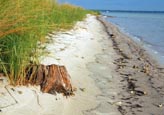
The next time you visit the seashore, be a beach scavenger! You will see lots of different and very interesting plants and animals. Count them as you go to see how many different forms of life you can spot. A scavenger has to be very thorough and look in every place he can think of, so here is a guide to help you as you go.
Above the sand on the beach among the rocks, drifted logs, grass, and other plants, look for these:
- Birds – they like to hunt food on the beach and along the water, but they usually live someplace farther away from the water, such as in tall grass or on top of high rocks.
- Tracks – birds, crabs, and other animals may have left tracks behind while they were out looking for something tasty to eat. Also look for broken shells or other signs left behind from an animal’s meal.
- People – you will probably see a lot of other people at the beach, which could make it hard to find animals! Look for a quiet place on the beach with the fewest people.
On the beach, walk around on the sand that stretches along the ocean and look for these:
- Driftwood – this is wood that has been soaked in the salty ocean water for a long time. The tides often carry it onto the beach where it might get stuck and stay for days or even years, depending on the size of it.
- Seaweed – move it around with a stick to see if anything got tangled up in it.
- Insects – get down close to the ground and look for bugs in the sand who are searching for food.
- Snails – you might find snails that are hiding inside their shells, or you might find empty snail shells.
- Crabs – you don’t want to get too close to these guys, they can pinch!
- Jellyfish – be very careful; never touch a jellyfish or get too close to it even if it looks like it is dead – it can still sting you!
- Birds – what are they doing? They are probably looking for fresh food that has been washed up by the waves.
- Holes in the sand – what do you think those holes are from? Small creatures such as clams like to bury themselves in the sand to stay wet and cool while the tide is out. (When the tide is out there is less water on the beach and the sand starts to dry out in the hot sun!)Try This: If you find a hole in the sand, you can carefully dig under it and put the sand on a screen over a pan or bucket. Then gently shake the screen to sift the sand and see what you can find. If you find any live creatures, look at them quickly and then return them to the sand so that they do not dry out and die!
- If you are at a rocky beach: watch the rocks to see if you can spot any sea otters or seals. They might be hiding, hunting, or out sunning themselves.
- This is also a good time to find a quiet spot to sit down and watch for life around you! Keep track of everything you see and watch what the animals do.
Along the shore’s edge, where the water and waves first touch the sand of the beach, look for these:
- Seaweed or algae.
- Plankton – very tiny plants and animals that float near the surface of the water.
- Small fish.
- Shells from ocean creatures – how many different kinds can you find?
- Look out across the ocean and watch for more life. Can you see dolphins or fish jumping out of the water? Do you see birds flying over the ocean?Important: Be careful when you are on the shore! If you wade in the ocean water, make sure you have an adult watching to warn you of any high waves that could hurt you.
When you get home from your seashore exploration, print out this coloring page and color the animals and other things that you saw.
Project 2: Dry Sand or Wet Sand?
Sometimes sand is perfect for making sandcastles and at other times it just falls apart. When is sand the best for making sandcastles? Do this experiment to find out!
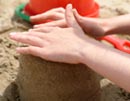
What You Need:
- A plastic tub or container
- Dry sand (enough to fill your container 1/2 full)
- Water
- A seashell (or some other solid object)
What You Do:
1. Fill the plastic tub about 1/2 full with dry sand. Tilt the tub back and forth and watch how the sand moves.
2. Add water to the tub until the sand is wet enough to pack together. Now try tilting the tub back and forth. What happens?
3. Press a seashell or other object into the wet sand and then remove it. What do you see?
4. Now add more water until the sand is really soft and mushy. Tilt the tub again and see what happens to the wet sand.
5. Press a seashell into the sand again. What happened this time?
What Happened:
When the tub was tilted back and forth with the dry sand in it, the grains of sand easily moved past each other. But when you added water, the water surrounded each grain of sand and the surface tension of the water caused the grains of sand to stick to each other making the sand more solid, kind of like clay. That is why the seashell left an impression in the sand. Sand that is damp like this works great for making sandcastles because it holds together so well.
When you added more water to the already damp sand, the sand became saturated. Saturated means that it has already soaked up as much water as it can hold. That made the the grains of sand separate from each other and they could no longer stick together. This time when you pressed your shell in, did the sand keep the shell’s shape? Probably not. Sand that is too wet can’t hold the shape of an object since the sand grains can’t stick to each other. That means that sand that is too wet doesn’t work well for sandcastles because the grains cannot stick to each other.
Project 3: Salt From the Sea
Have you ever accidentally gotten ocean water in your mouth? If you have, you know that ocean water is very salty! Water evaporates from the ocean every day, but what happens to the salt in seawater after the water has evaporated? Do this experiment to find out!
What You Need:
- Seawater (or salt and water to make your own)
- 2 or 3 jars
- Food coloring
- A piece of aluminum foil
- Eye dropper
What You Do:
1. If you don’t have real seawater, you can make some saltwater by mixing 3-4 tablespoons of salt with 1 cup of water. Use hot water from the faucet so that the salt will dissolve easily.
2. Pour some of your seawater into each jar and add a few drops of a different food coloring to each jar.
3. Using the eye dropper, drop some seawater onto the foil. Be creative and make designs using your different colors of seawater solutions.
4. Allow the seawater to dry up. This may take several hours. To help speed up the process, put your foil and seawater in the sun.
5. After the water has evaporated, what do you see on the foil?
What Happened:
After the water has evaporated, you should see tiny salt crystals where the seawater used to be. (The food coloring stuck to the salt crystals, making them easier to see.) When the water evaporated, the salt got left behind. The same thing happens to the saltwater in the oceans. However, fresh water is constantly being added back to the oceans through rivers and rainfall. If fresh water was not being added to the oceans, the oceans would slowly become saltier as the water evaporates.
Seashore Science Lesson
Teach About the Tides
At different times of the day, there is a noticeable difference in how far the water comes up on the beach. These are called tides. Tides are caused by the gravitational pull that the moon and sun have on the earth. The sun does not have as strong of a pull on the oceans as the moon does because it is so far from Earth. Tides are also affected be the rotation of the earth. When the ocean’s waves reach high onto the shore and cover most of the beach, it is high tide. When the ocean’s waves are very low and most of the beach is left uncovered, it is low tide. The high and low tides create a space on the shore called the intertidal zone. At high tide, the area is covered in water. At low tide, the area is an exposed rocky or sandy beach.
Look for Life on the Beach
Two great places to look for plants and animals on the seashore are the strandline and tide pools. The strandline is the farthest place the water reaches on the beach at high tide. Plants, animals, and other items in the ocean often get stranded there because the water is not strong enough to pull them back out to sea. Tide pools form when the high tide comes in and the holes in the rock are filled with salty ocean water. Tide pools provide sheltered places for many sea creatures that were washed in with the tide. Both of these places are best to observe during low tide. And since the ocean brings in new items and washes old items back into the sea, what you can find in the strandline and tide pools changes with each tide! The next section describes the four tidal zones and what kind of life to look for in each zone.
To help your child observe the seashore, use this coloring page as a scavenger hunt.
For more about tide pools and the animals that live in them, visit our Tide Pools Teaching Tip.
The Zones Where Land and Water Meet
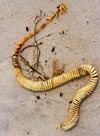
- The Spray Zone. This area is usually dry and only gets sprayed by the ocean’s waves at high tide. Barnacles and whelks often live in the spray zone. Barnacles are small marine animals with very hard shells. They cling to driftwood, rocks, piers, ships, and even whales! Whelks are large marine snails with spiral shells that look like conches. You may find a string of whelk egg capsules while walking along the beach. Explain that the female whelk lays an egg case at the bottom of the ocean, burying one end so that the case does not get carried to the shore and dry out until the eggs have hatched.
- The High Tide Zone. This area is wet during high tide, but only the tide pools in this zone stay wet all of the time. Along with barnacles and whelks, the high tide zone may have crabs, mussels, sea anemone, starfish, and snails. Underwater ocean plants, like seaweed and green algae, often grow in and near tide pools. Items also get tangled up in seaweed, so you may want to use a stick to help you uncover what may be hidden underneath. A very colorful and interesting creature you might find in a tide pool is a sea anemone. Its many tentacles stretching out from its round body make it look like a plant, but it is actually an animal that clings to rocks.
- The Middle Tide Zone. This area is wet and dry, making it a tough place for most animals to live. It is covered and uncovered twice a day with salty water from the tides. But there are plants and animals that can stand the change in wet and dry conditions and they call this area their home. Animals and plants that can live in the high tide zone can also live here, along with more unique ocean animals like sponges. Sponges are not able to move around on their own, so they attach themselves to stationary objects like rocks or sunken ships. You may find shells and clams in this zone. Due to the fact that it’s a rough journey onto land, most of the shells will probably be broken. Pick up a shell fragment and see if your children can guess what kind of animal it belonged to or what the shell’s original shape was. You may also want to collect shells and group them by the kind of animal they belonged to. This is always a good opportunity to talk about classification of animals.
- The Low Tide Zone. This is almost always wet unless the tide is extremely low. The creatures that live here are used to the environment of ocean water and cannot be exposed to extreme dryness. Mussels, sea cucumber, sea lettuce, sea palms, sea stars, sea urchins, shrimp, surf grass, and tube worms all live in this area. Sea cucumbers get their name because they look like cucumbers grown in a garden. They eat plankton found near the sea floor and have spiny tentacles on their body to help them catch food.
This visual guide is helpful for explaining the zones to children.