Spectroscope Analysis Kit
Explore the science of spectroscopy as you watch elements burn with
brightly-colored flames, each producing a unique light spectrum! Scientists use
spectroscopy to determine what elements are present in stars, among other
things. With this kit you'll be able to observe the wide variety of light spectra produced
from different elements, and even find out what elements are used in your
neighborhood street lights.
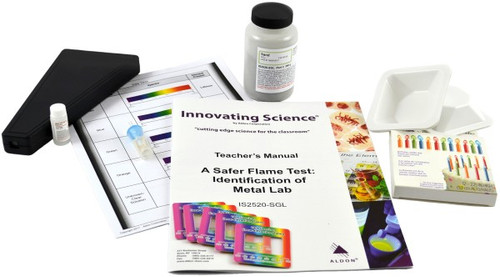
Kit includes a quantitative spectroscope, a study guide with data sheets and review questions, wooden splints, and four different chloride salts: calcium, potassium, strontium and lithium. Ages 12 & up.
This might help you come up with a good science fair project: How could you demonstrate how astronomers use spectroscope technology to identify the composition of stars?
Overall Rating:
Write an online review and share your thoughts with other customers
Sort Reviews: Newest |
Oldest |
Highest Rating |
Lowest Rating 
- Thursday, April 24, 2008
Spectroscope Analysis KitReviewed By: Sue Eberhard I teach a high school chemistry course for homeschoolers and we really liked these for adding insight to our flame tests of chloride salts. They were easy to use for students and durable enough for energetic boys.

- Monday, February 04, 2008
Great for Astronomy Study TooReviewed By: Susan Martin We bought this set after attending an astronomy lecture about how spectroscopy is used to study the makeup of stars. Using the kit provided a solid understanding of how spectroscopy works. In addition to using the scope to view the burning salts, we also used it to look at our incandescent and fluorescent light bulbs and to identify the two types of street lamps used in our neighborhood (mercury vapor and sodium vapor).

- Wednesday, September 27, 2006
Spectroscope Analysis KitReviewed By: Sally Rogers My daughter, a science enthusiast, just adored using this kit to gain information about the light spectrum. She was really impressed with the part of the experiment that required the burning of the different compounds (her father obviously watched over her). The experiments went quickly and easily. Also, she enjoyed looking through the spectroscope to separate the light into bands.